



At SINAI Schools, Inclusion by Design® begins with a simple but powerful idea: students thrive when they are given opportunities to learn, socialize, and grow within a community that embraces them. Because each SINAI school is integrated within a mainstream partner school, students take part in the daily rhythm of school life – sharing experiences, forming connections, and participating in the moments that make each school year meaningful.
“I have a daughter in SINAI and a daughter in the mainstream school that partners with SINAI,” said Miriam Gardin. “I have seen how it is good for both of them to have opportunities to really connect with and engage with the students from each school.”

One of the clearest illustrations of this is the Lunch Buddies Program at our Shalem High Schools. Through this program, SINAI students are paired with peers from their partner schools for lunch and social time. What begins as a shared meal often develops into genuine friendships, with many of these relationships lasting long after students graduate.
Inclusion by Design® also comes to life through shared school experiences. On a recent grade-wide trip to Boston, SINAI students traveled alongside their classmates, exploring the city, playing sports together, sharing meals, and cheering at a baseball game at Fenway Park. These experiences allow students to connect naturally with their peers while creating memories that become a meaningful part of their high school years.
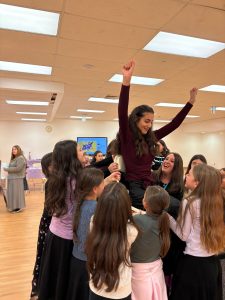
Students also celebrate important milestones together. Earlier this year, a SINAI student celebrated her Bat Mitzvah surrounded by both her SINAI classmates and mainstream peers. The celebration reflected the friendships and connections she had built within her school community and demonstrated how Inclusion by Design® extends beyond academics into the moments that matter most.
That same spirit was evident at a recent Siyum Tanach, when a SINAI student stood before the entire school and delivered a thoughtful dvar Torah about what his class had learned. He spoke with confidence, captivating the audience. When he finished, he was greeted with high fives, cheers, and a final dance that brought the entire school together in joy. It was a powerful reminder of what can happen when students are given opportunities to participate fully and are supported by a community that celebrates their success.
Throughout the year, SINAI students also take part in many of the traditions that help define school life, including Siddur and Chumash plays, school-wide activities, and the Israel Day Parade, where they proudly march alongside their mainstream peers. These moments, both large and small, reinforce the connections students build throughout the year and strengthen their sense of belonging within the broader school community. Often, it is the everyday interactions that leave the greatest impact. As one SINAI parent reflected, “The frequent high fives in the hallways from TABC boys make S feel like just one of the guys – an amazing experience for someone who has so often in his life felt on the fringes.”
For some students, SINAI’s Inclusion by Design® model supports them when they are ready to start participating in classes in the mainstream partner school. SINAI teachers and administrators work closely with their counterparts in our partner schools to help students succeed in mainstream educational settings. “The fact that my son can take advanced classes at a place like Kushner, while also receiving the extra support he needs, has given him the best of all worlds,” said SINAI parent Ami Feinstein.
From lunch tables and school trips to milestone celebrations and school-wide activities, one message is clear: inclusion is not one event. It is a culture built through thoughtful planning, individualized support, and a commitment to recognizing each student’s strengths. At SINAI, Inclusion by Design® is more than a philosophy – it is a lived experience that allows students to build friendships, gain confidence, celebrate achievements, and know that they are valued members of their school communities.
To read this article as it originally appeared in the Jewish Link, click here.